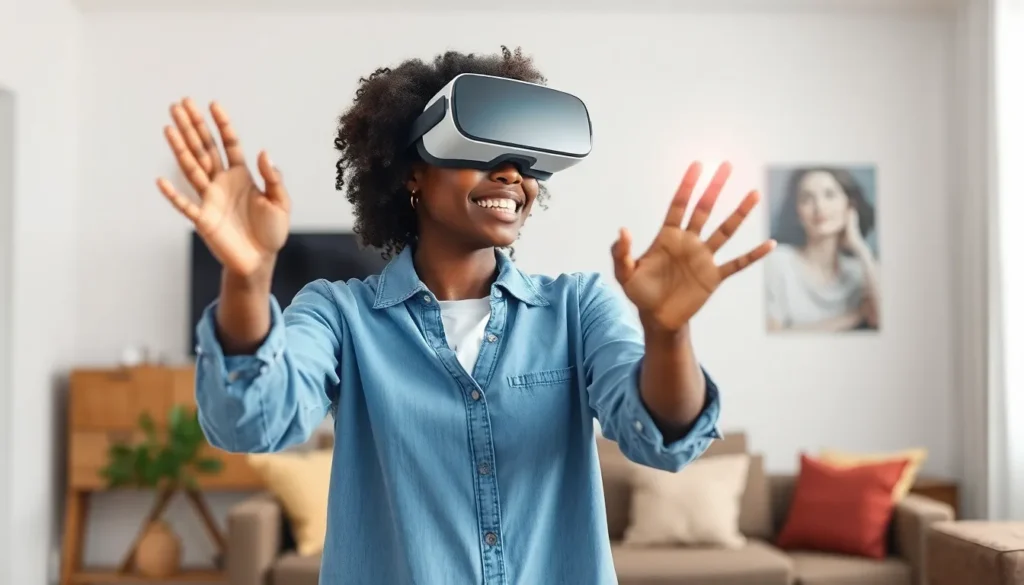
In a world where reality sometimes feels a bit too mundane, augmented reality swoops in like a superhero with a cape made of pixels. Imagine transforming your everyday surroundings into a vibrant playground where digital elements dance around you, making life not just bearable but downright exciting. Whether it’s trying on virtual shoes without ever leaving your couch or battling dragons in your living room, augmented reality is here to spice things up.
Overview of Augmented Reality
Augmented reality (AR) merges digital information with the real world. It enhances the user experience by overlaying images, sounds, and other data onto the physical environment. This technology finds applications in various fields, including education, healthcare, and gaming.
Education benefits immensely from AR. Students interact with 3D models in real-time, fostering deeper understanding of complex concepts. For example, a biology class might use AR to visualize human anatomy, making lessons more engaging.
Healthcare also sees significant advancements through AR. Surgeons use AR systems to visualize critical information during operations, ensuring accuracy and improving outcomes. Such technologies enable doctors to overlay medical imaging directly onto the patient’s body.
Gaming represents one of the most popular uses of AR. Players immerse themselves in interactive experiences that blend fictional elements with their surroundings. Pokémon GO exemplifies this trend, allowing users to capture virtual creatures in real locations, resulting in millions of downloads worldwide.
Retail incorporates AR to revolutionize shopping experiences. Customers can virtually try on clothes or visualize furniture in their homes before making purchases. Brands like IKEA offer apps that let users place 3D models of furniture within their living spaces.
As technology evolves, so too do the possibilities of AR. Researchers explore applications in architecture, tourism, and remote collaboration. Enhanced AR systems may provide users with richer experiences, further blurring the lines between digital and physical realities.
Augmented reality continues shaping how individuals interact with their environments, offering innovative solutions and enhancing everyday life.
Applications of Augmented Reality
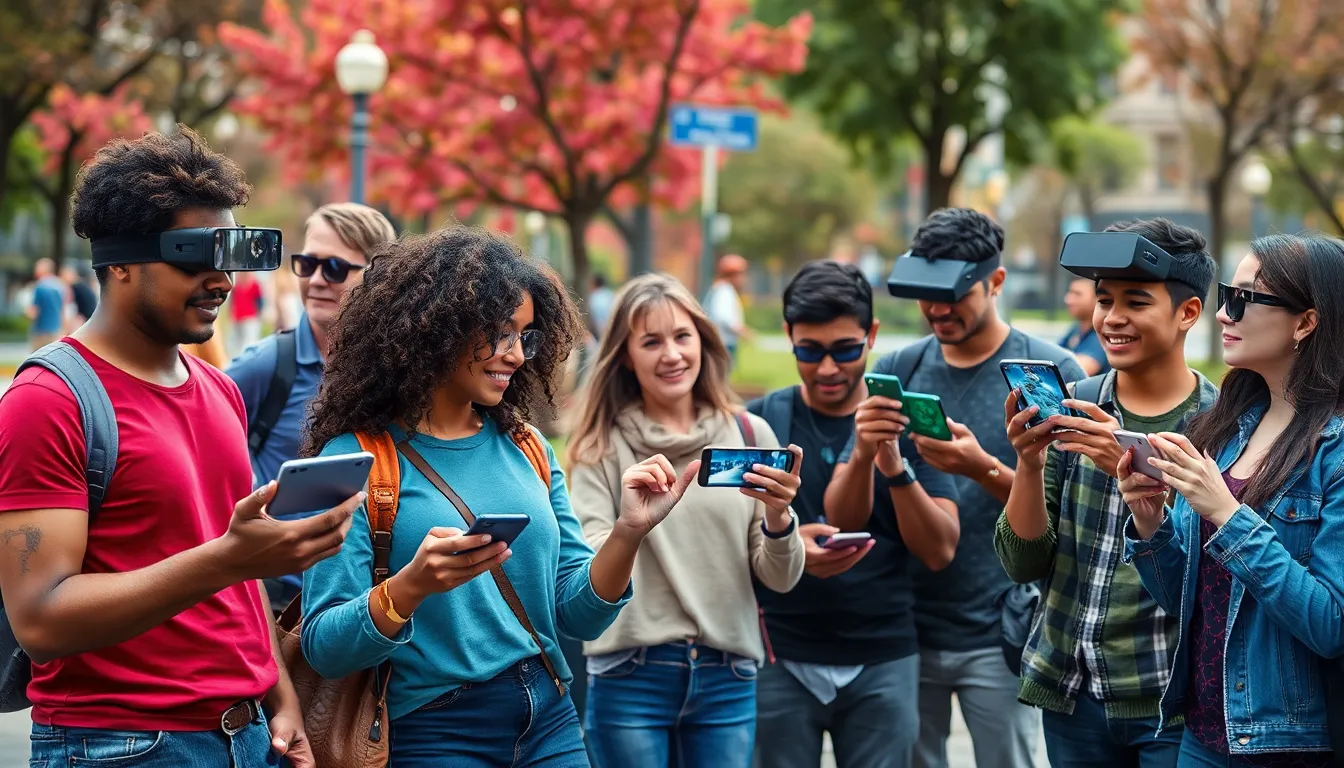
Augmented reality showcases diverse applications across various fields, fundamentally transforming how individuals interact with their surroundings.
Gaming and Entertainment
Gaming and entertainment stand at the forefront of AR applications. Players experience immersive environments where digital elements interact seamlessly with the real world. Popular games such as Pokémon GO illustrate how AR encourages exploration and social interaction. Through AR, users engage deeply with games, enhancing gameplay beyond traditional formats. Interactive experiences provide a unique blend of virtual fun and physical activity.
Education and Training
AR significantly enhances education and training. Students visualize complex concepts through 3D models, making subjects more accessible and engaging. Instructors utilize AR to create interactive lessons that capture attention. The technology also facilitates remote learning, allowing users to experience real-time feedback and simulations. Training programs use AR for hands-on practice and skill development in various professions, improving learning outcomes.
Healthcare
Healthcare professionals leverage AR to improve surgical precision and patient care. Surgeons access critical data overlaying their field of view during procedures, enhancing decision-making. AR also aids medical students in training, providing realistic simulations of complex surgeries without risk to patients. Visualization tools allow healthcare providers to communicate treatment plans more effectively. Innovations in AR continue to revolutionize diagnostics and patient education.
Retail and Marketing
Retailers embrace AR to elevate the shopping experience. Customers virtually try on clothes or visualize how furniture fits in their spaces before purchasing. This technology fosters informed buying decisions and minimizes returns. Brands leverage AR in advertising campaigns, capturing consumer attention through interactive elements. Shoppers connect with products on a deeper level, leading to a more personalized and engaging shopping journey.
Advantages of Augmented Reality
Augmented reality enhances various sectors by providing unique advantages. It improves user engagement significantly. Interaction with digital elements creates immersive experiences that captivate audiences.
In education, AR fosters deeper understanding and retention of information. Students interact with 3D models, enabling them to grasp complex concepts effectively. In healthcare, AR plays a crucial role in surgical precision. Surgeons access vital information layered over live procedures, which leads to better outcomes.
Retail benefits from AR applications that transform shopping experiences. Customers visualize products in their own spaces before buying, reducing the likelihood of returns. Gamers enjoy AR experiences that merge real and virtual worlds, encouraging exploration and social interaction in fun ways.
Collaboration also sees growth through AR. Teams collaborate remotely via virtual overlays, streamlining communication and project execution. Marketing strategies can leverage AR to create interactive advertisements that engage consumers on a new level.
Training programs utilize AR for hands-on practice, allowing trainees to learn in realistic environments. High-stakes industries such as aviation and military leverage AR for simulation training, ensuring personnel are well-prepared for real-world challenges.
Cost-effective solutions emerge with AR technology. Businesses can save on resources by opting for virtual demonstrations instead of physical prototypes. Overall, augmented reality proves beneficial across fields, enhancing experiences, improving outcomes, and enabling innovation.
Challenges and Limitations
Augmented reality (AR) faces several challenges that affect its adoption and effectiveness. High development costs hinder many smaller companies from exploring AR solutions. Technical limitations also present significant barriers, as devices must support advanced graphics to provide seamless user experiences.
User experience often suffers due to issues like motion sickness and poor graphics. This can lead to user frustration, reducing engagement with AR applications. Furthermore, privacy concerns arise as AR applications frequently require access to personal data and device cameras.
Content creation represents another challenge. Generating high-quality AR content demands technical expertise and substantial resources. This complicates the process for businesses trying to implement AR solutions efficiently. Additionally, the fragmentation of platforms creates inconsistencies in user experiences, as AR applications may not function uniformly across various devices.
Adoption barriers exist among consumers as well. Skepticism about AR’s benefits prevents potential users from fully embracing the technology. Educating the public on how AR enhances everyday experiences remains a pressing task for advocates of this technology.
Access to technology creates limitations in some environments. Not all users possess devices capable of running sophisticated AR applications. Geographic disparities also influence AR adoption, as regions with limited internet connectivity struggle to access cloud-based features.
Regulatory challenges may arise as developers navigate legal frameworks surrounding data usage and privacy. Compliance with these regulations adds complexity to AR projects, potentially delaying deployment. Overall, addressing these challenges remains crucial for harnessing AR’s full potential.
Future Trends in Augmented Reality
Augmented reality continues to evolve, presenting exciting possibilities for various industries. Increased adoption of AR in training and education optimizes learning experiences. Businesses now integrate AR to enhance staff training with immersive simulations that replicate real-world scenarios.
Advancements in wearable technology contribute to the growth of AR experiences. Smart glasses enable users to access AR content hands-free, allowing for seamless interaction. Retail environments benefit greatly from this technology, as interactive displays and virtual fitting rooms become commonplace.
Mobile applications lead the charge in AR integration. Popular smartphone apps incorporate AR features, allowing users to try products virtually at home. Gamification elements further enhance user engagement with everyday tasks, making activities more enjoyable.
5G technology facilitates improved AR performance. Lower latency and higher data transfer rates create smoother experiences, essential for real-time applications. Industries such as healthcare leverage this growth, providing telemedicine solutions that use AR to enhance remote consultations.
AI integration further fine-tunes augmented reality applications. Machine learning algorithms provide personalized user experiences, tailoring content based on individual preferences. Data-driven insights will help businesses better understand customer behavior and refine AR offerings.
Privacy regulations influence the future landscape of AR. Companies adapt to stricter guidelines, ensuring user data protection remains a priority. Enhanced security measures will build consumer trust, encouraging broader AR adoption.
Market forecasts suggest substantial investment in AR technologies. Statista predicts the global AR market could reach $198 billion by 2025. Industries across sectors will increasingly recognize and capitalize on augmented reality’s transformative potential.
Augmented reality is reshaping how people interact with the world around them. Its ability to blend digital elements with real-life experiences creates opportunities for innovation across various industries. From enhancing education and healthcare to revolutionizing retail and gaming, AR’s impact is undeniable.
As technology progresses and challenges are addressed, the potential for AR continues to expand. With increasing investment and advancements in wearable devices and mobile applications, users can expect even more immersive experiences in the near future. The future of augmented reality promises to be vibrant and transformative, offering exciting possibilities for businesses and consumers alike.